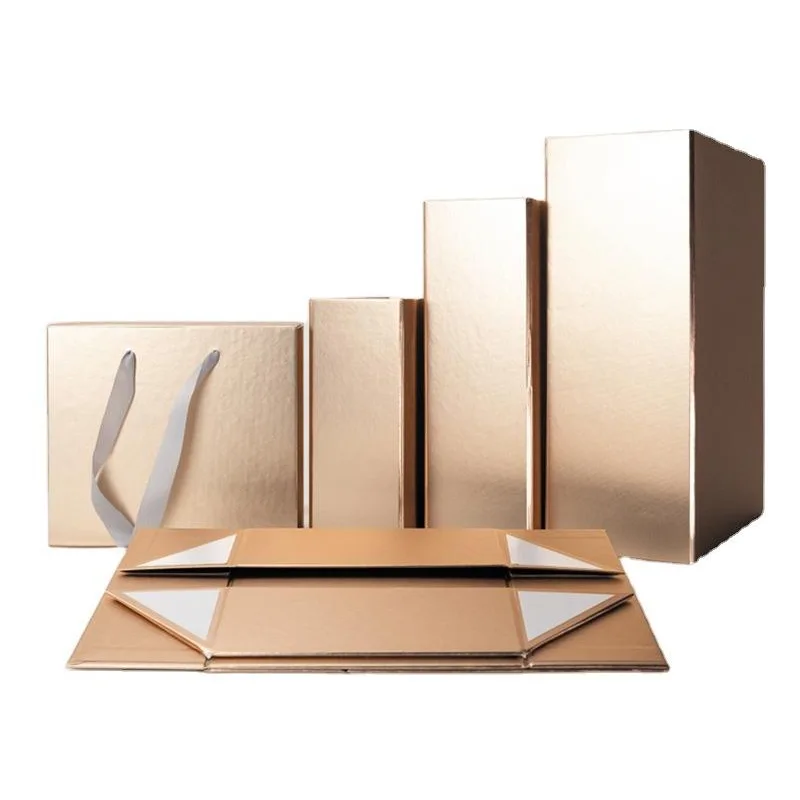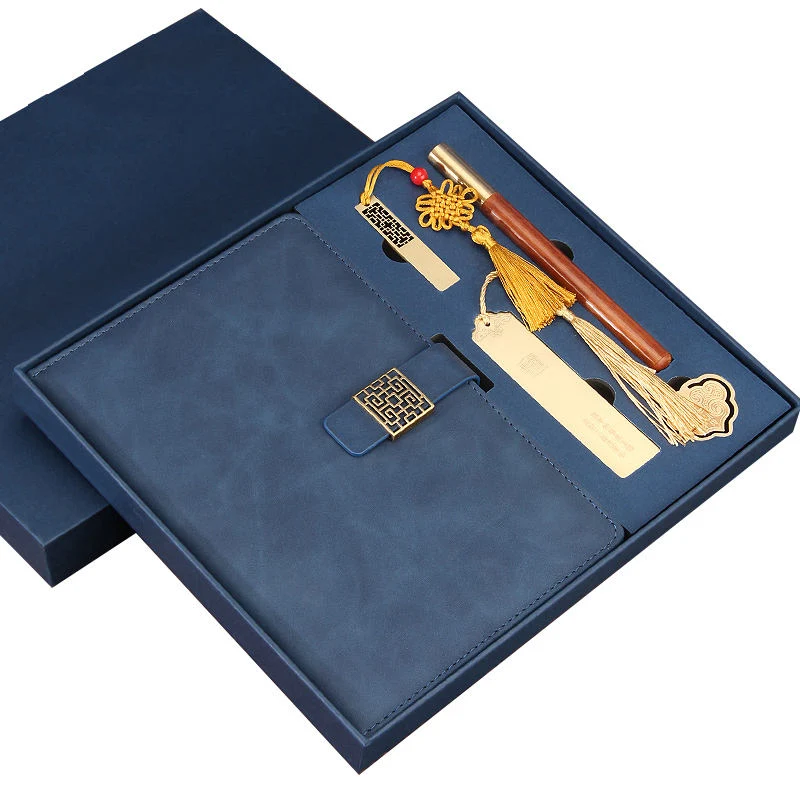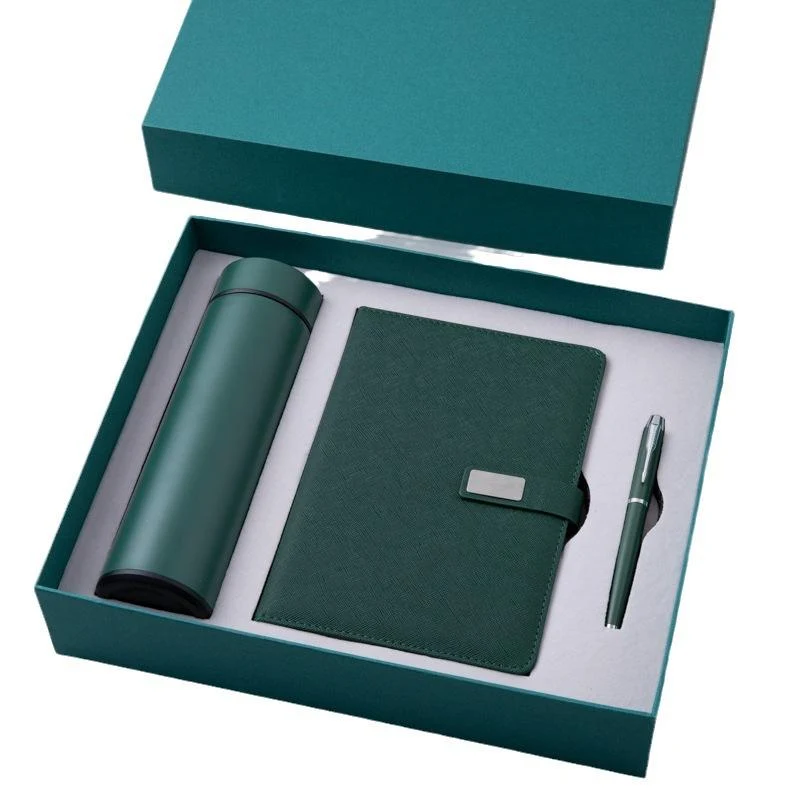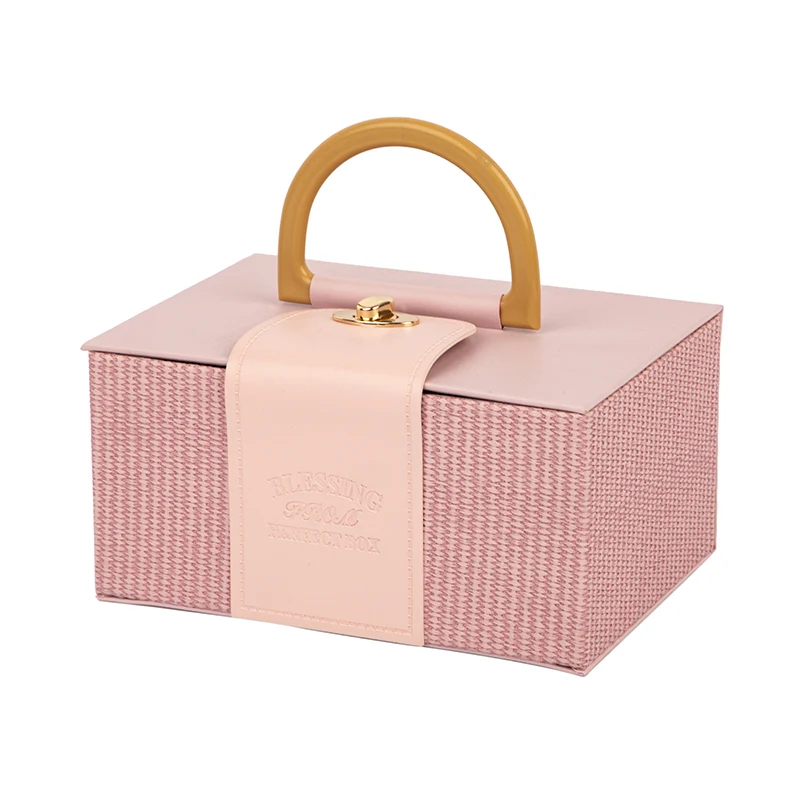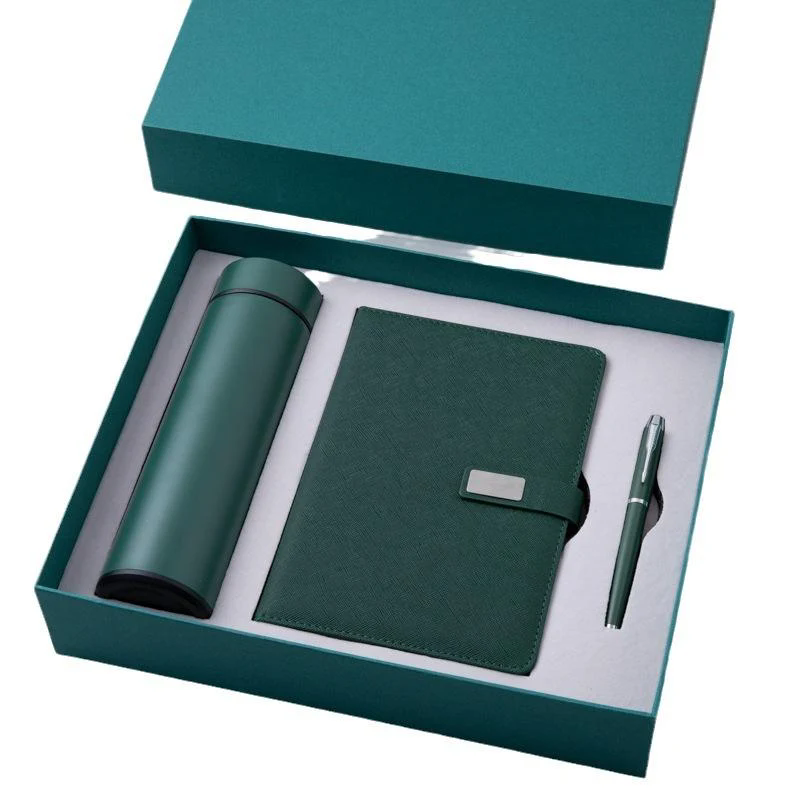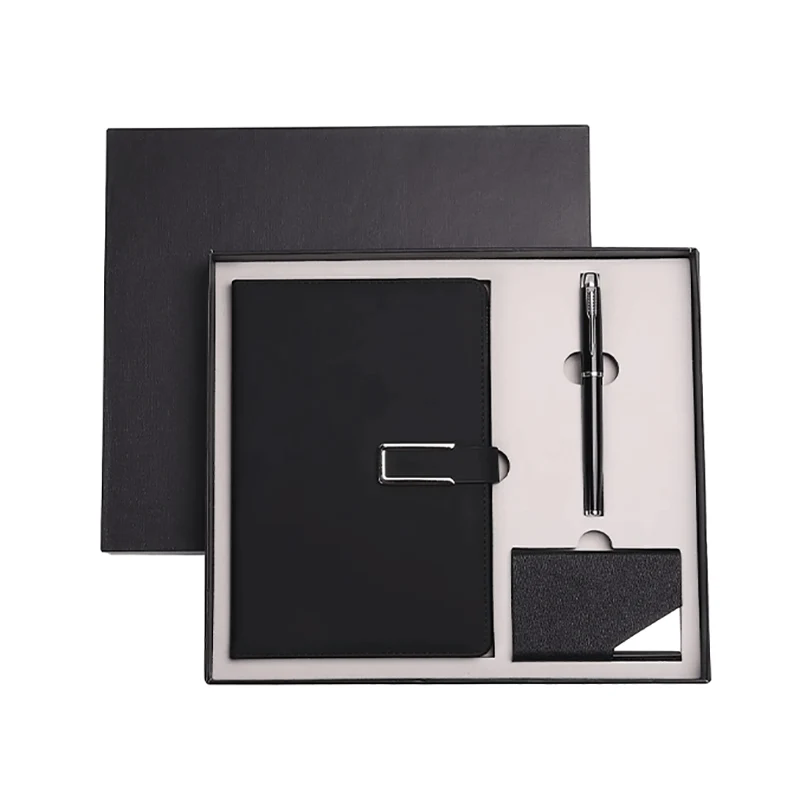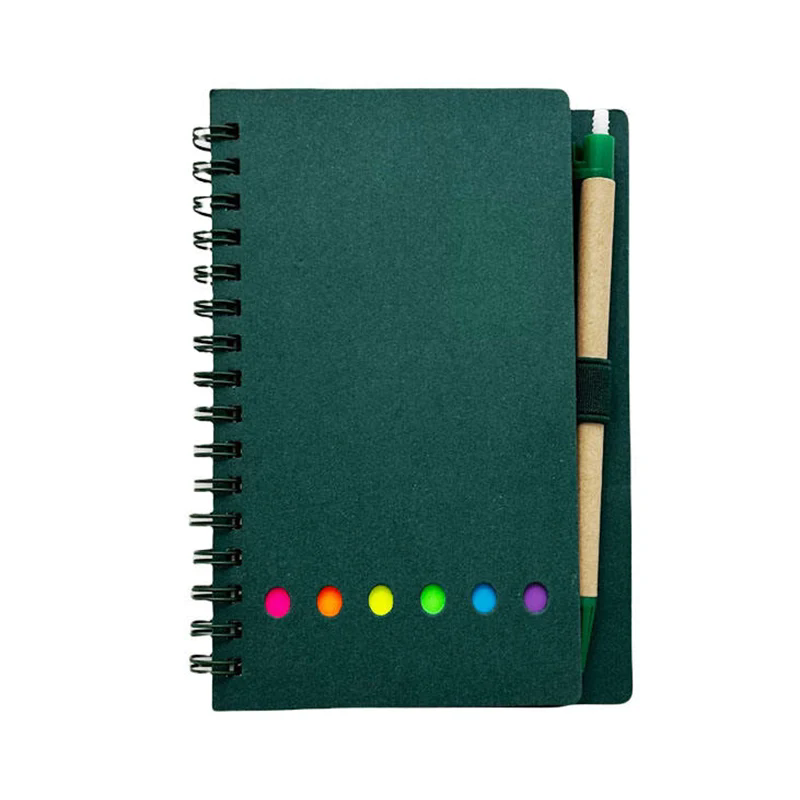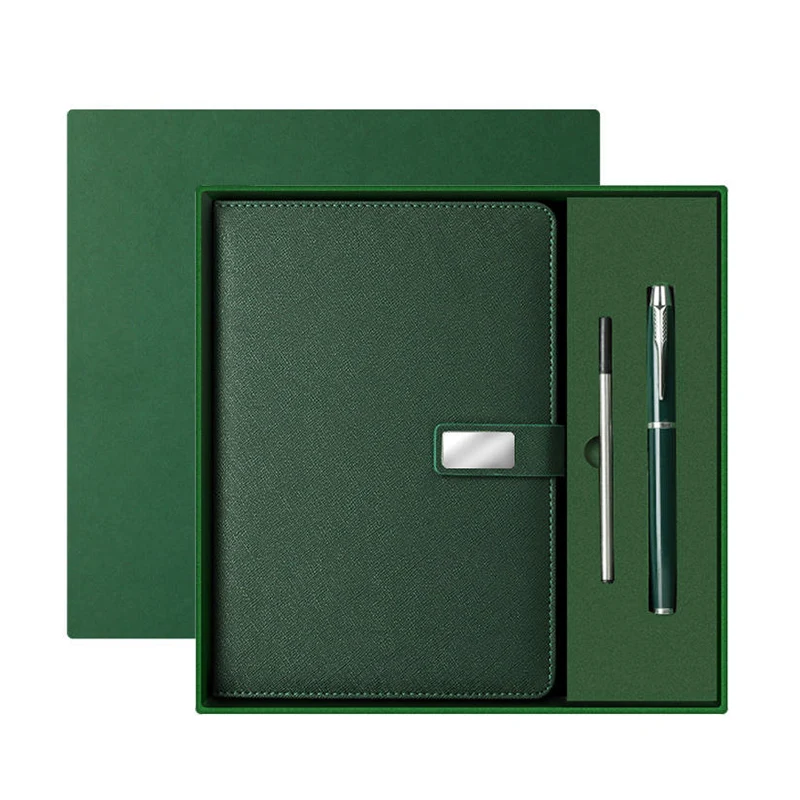
A notebook gift set is often judged before it is opened. The recipient sees the box, lifts the lid, and touches the cover. In that moment, the material tells a story about the giver and the brand behind it. A paper board cover can look clean and professional, but it rarely creates a lasting impression. A premium leather cover changes the experience. It feels warmer than plastic, develops a patina with use, and signals that the gift was selected with care. For procurement managers sourcing corporate Gift Sets, the leather specification is not a cosmetic detail. It is one of the few material choices that affects perceived value, durability, tactile response, and brand positioning at the same time.
This guide is written for buyers who need to understand the role of premium leather in a notebook gift set before they place an order. We will examine how leather changes perceived value, how leather grade affects durability, how tactile factors influence recipient response, how leather supports branding, what buyers should verify in the specification, and how to evaluate a supplier. At Wenzhou Yanhe Technology Co., Ltd., our factory produces notebook Gift Sets with premium leather covers and has supported corporate and retail programs across multiple markets. This article reflects the practical lessons from those programs and provides the parameters that buyers should include in a purchase order.
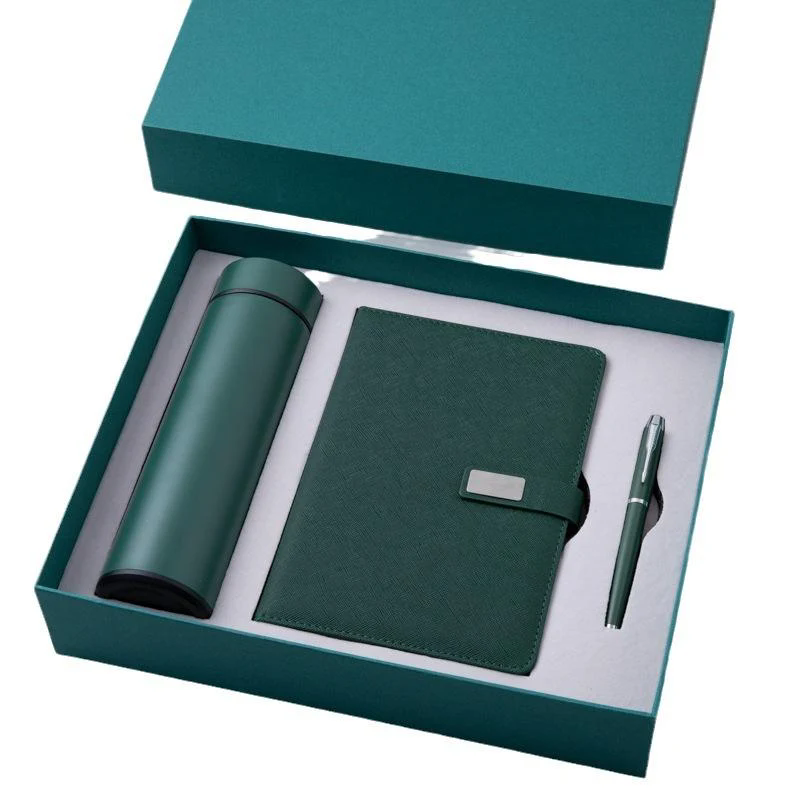
Perceived value is not the same as material cost. It is the sum of what the recipient sees, feels, and expects. Premium leather raises perceived value because it carries a set of associations that are difficult to replicate with synthetic materials. Leather is associated with craftsmanship, durability, and maturity. It is used in watch straps, briefcases, shoes, and furniture because it ages in a way that people find attractive. When a notebook gift set uses a leather cover, the recipient transfers those associations to the gift and, by extension, to the giver. The effect is not abstract. It influences how the gift is used, how long it is kept, and how the recipient talks about it afterwards.
There is also a practical value effect. A premium leather cover protects the notebook pages from moisture and abrasion. It provides a stable surface for writing when the notebook is held in the hand. It holds its shape after repeated opening and closing. These functional benefits reinforce the perception of quality. A gift set that looks good but falls apart after a month creates the opposite effect. The table below compares the value perception of premium leather against common alternatives.
| Cover Material | Perceived Value | Durability | Aging Behavior | Typical Use |
| Full-Grain Leather | High | Excellent | Develops patina | Executive Gift Sets |
| Top-Grain Leather | Medium-High | Very good | Develops light patina | Corporate Gift Sets |
| PU Leather | Medium | Moderate | Peels over time | Entry-level Gift Sets |
| Paper Board | Low-Medium | Fair | Edges wear | Promotional Gift Sets |
| Fabric | Medium | Moderate | Stains easily | Casual Gift Sets |
At Wenzhou Yanhe Technology Co., Ltd., our factory treats leather selection as a value engineering decision. We ask buyers three questions before recommending a leather grade: who will receive the gift set, how long should the gift remain in use, and what brand message must the material support. The answers determine whether full-grain, top-grain, or a leather alternative is appropriate. Our experience is that premium leather is not always the right answer for every budget, but when the gift set is intended to represent a brand at a senior level, it is rarely the wrong one.
The value effect also depends on consistency. If the leather on the cover is thin, the edges are unfinished, and the stitching is uneven, the perceived value collapses regardless of the leather grade. Premium leather must be paired with premium construction. That means a cover board with enough rigidity to support the leather, a lining that does not wrinkle, and stitching that is straight and tight. Buyers who specify premium leather without specifying the construction details often receive a product that does not deliver the expected value. This is why the specification must cover both the material and the method.
Leather grade determines how the cover will perform over time. Full-grain leather retains the outermost layer of the hide, including the natural grain. It is the strongest and most durable grade, and it develops a patina that many recipients find desirable. Top-grain leather is sanded to remove surface imperfections, which makes it more uniform but slightly less durable. Corrected-grain leather is sanded and embossed with an artificial grain, and it is more prone to cracking. Bonded leather is made from leather scraps and adhesive, and it is the least durable option. For a notebook Gift Set that is expected to be used daily, the grade is not a minor detail. It determines whether the cover looks better after a year or worse.
The table below provides a grade ladder for buyers, with the performance characteristics that matter in a notebook gift set.
| Leather Grade | Source | Durability | Patina | Relative Cost | Recommended For |
| Full-Grain | Outermost hide layer, natural grain | Excellent | Strong | High | Executive and premium Gift Sets |
| Top-Grain | Sanded and treated | Very good | Moderate | Medium-High | Corporate Gift Sets |
| Corrected-Grain | Sanded and embossed | Good | Weak | Medium | Budget Gift Sets |
| Bonded Leather | Scraps and adhesive | Poor | None | Low | Not recommended |
Durability also depends on the tannage. Chrome-tanned leather is soft and uniform, and it is suitable for covers that need to be flexible. Vegetable-tanned leather is firmer and develops a deeper patina, but it requires more care. For a notebook gift set, the tannage affects how the cover feels in the hand and how it responds to handling. Our factory at Yanhe offers both chrome-tanned and vegetable-tanned options, and we match the tannage to the intended use and the brand positioning. A gift set for daily use may benefit from chrome-tanned leather, while a gift set for a luxury retail program may benefit from vegetable-tanned leather.
Buyers should also specify the leather thickness. A cover leather that is too thin will feel flimsy and may wrinkle over the board. A leather that is too thick will be difficult to turn at the edges and may create bulky corners. For notebook covers, a thickness of 1.0 mm to 1.5 mm is typical. The specification should state the thickness range and the tolerance. Without this detail, the supplier may use a leather that meets the grade but not the hand feel or the construction requirement.
Tactile response is the reason many recipients prefer leather even when they cannot explain why. Leather feels warmer than plastic. It has a slight give under the fingers. It absorbs the natural oils from the hand and changes appearance over time. These sensory qualities create a sense of ownership. A notebook with a leather cover becomes the recipient's notebook, not a generic corporate item. For a gift set, this sense of ownership is valuable because it increases the chance that the gift will be used and kept. The table below provides a sensory audit checklist that buyers can use when evaluating samples.
| Sensory Factor | What to Evaluate | Preferred Result |
| Temperature | Touch the cover after it has been at room temperature | Warm, not cold or plastic-like |
| Surface Grain | Look and feel the grain pattern | Natural variation, not uniform |
| Suppleness | Press the cover gently | Slight give, returns to shape |
| Edge Finish | Inspect the turned edges and cut edges | Smooth, painted or burnished |
| Stitching | Check stitch length and tension | Even, tight, no loose threads |
| Smell | Smell the cover | Natural leather scent, not chemical |
The sensory audit is not a substitute for a laboratory test, but it is a practical way to compare samples. A buyer who evaluates three suppliers should perform the same audit on each sample and record the results. The differences are often obvious. A low-grade leather may look acceptable in a photograph but feel thin and cold in the hand. A premium leather may show natural grain variation that a low-grade leather hides. These differences matter because the recipient will experience the gift through the senses, not through the specification sheet.
Our factory at Wenzhou Yanhe Technology Co., Ltd. provides sample notebooks with different leather grades so that buyers can perform the sensory audit before committing to a production order. We also provide guidance on the edge finish and stitching that best suit the leather grade. Our goal is to ensure that the tactile experience matches the brand promise. A premium Gift Sets program that delivers a thin, cold cover will not achieve the intended effect, even if the leather grade is technically correct. The sensory audit closes that gap.
Leather is an excellent surface for branding because it accepts embossing, debossing, foil stamping, and laser engraving. Each technique produces a different effect. Embossing raises the logo above the surface and creates a tactile impression. Debossing recesses the logo and creates a subtler effect. Foil stamping adds a metallic color that can match the brand palette. Laser engraving removes the surface layer and creates a precise, modern mark. The table below compares these techniques for leather gift set branding.
| Branding Technique | Effect | Durability | Best Suited For |
| Embossing | Raised logo, tactile | Permanent | Executive Gift Sets |
| Debossing | Recessed logo, subtle | Permanent | Corporate Gift Sets |
| Foil Stamping | Metallic color, high contrast | Long-lasting | Brand color matching |
| Laser Engraving | Precise, modern mark | Permanent | Technology and industrial brands |
| Screen Printing | Colorful graphic | Moderate | Promotional Gift Sets |
Branding on leather is not only about the logo. It is about the placement, the size, and the restraint. A large, high-contrast logo on a premium leather cover can look promotional. A small, well-positioned embossed logo can look confident. The choice depends on the brand and the occasion. For a corporate Gift Sets program, a common approach is to emboss the company logo on the front cover and add the recipient's name on the lower corner. This combination creates a personal gift that still carries the brand. The personalization increases the perceived value and reduces the chance that the gift is passed on to someone else.
Our factory at Wenzhou Yanhe Technology Co., Ltd. offers all of these branding techniques and can advise on the best option for a specific leather grade. We also provide pre-production samples so that the buyer can evaluate the logo size, placement, and contrast before the full order is produced. Our experience is that the most successful Gift Sets programs use a restrained brand mark and a personal element. The leather provides the canvas, and the branding provides the identity. When the two are balanced, the gift set feels considered rather than mass-produced.
Before specifying premium leather in a notebook gift set, buyers should verify a set of parameters that determine whether the final product will meet expectations. These parameters include the leather grade, the tannage, the thickness, the finish, the edge treatment, the stitching, the lining, and the branding method. The table below provides a procurement specification checklist that can be included in a purchase order.
| Specification | What to State | Why It Matters |
| Leather Grade | Full-grain, top-grain, corrected-grain | Determines durability and patina |
| Tannage | Chrome-tanned or vegetable-tanned | Affects feel and aging |
| Thickness | 1.0 mm to 1.5 mm, with tolerance | Affects hand feel and edge turning |
| Finish | Smooth, pebbled, matte, or polished | Affects visual and tactile response |
| Edge Treatment | Painted, burnished, or folded | Affects durability and appearance |
| Stitching | Stitch length, thread type, color | Affects construction quality |
| Lining | Material and color | Affects interior appearance |
| Branding Method | Embossing, debossing, foil, laser | Affects brand presentation |
The specification should also include the acceptable quality level for leather defects. Natural leather can have small scars, insect bites, or grain variations. These are normal, but they should be limited in size and number. A buyer who does not define the acceptable defect level may receive a cover with a visible scar on the front. Our factory at Wenzhou Yanhe Technology Co., Ltd. provides a leather defect standard with our quotes so that the buyer knows what to expect. We also provide a pre-production sample for approval before the production run begins.
Finally, the buyer should verify the packaging. A premium leather gift set deserves packaging that protects the leather and presents it well. A rigid box with a soft lining is appropriate. A simple poly bag is not. The packaging is part of the gift experience and should be specified along with the leather and the notebook. When all of these elements are specified, the risk of a disappointing delivery is significantly reduced.
Evaluating a supplier of premium leather gift sets requires a focus on leather sourcing, construction capability, branding quality, and consistency. The supplier must be able to source the specified leather grade and provide material certificates or samples. They must have the capability to turn the leather over the cover board, finish the edges, and stitch the cover consistently. They must be able to execute the branding method without damaging the leather. And they must maintain consistent quality across production batches. The table below provides a supplier scorecard that buyers can use during evaluation.
| Evaluation Criterion | What to Look For | Red Flag |
| Leather Sourcing | Certified tannery, grade documentation | No traceability or grade confirmation |
| Construction Capability | Precision cutting, edge finishing, stitching | Uneven edges or loose stitches in sample |
| Branding Quality | Clean embossing, accurate placement | Blurred logo or damaged leather |
| Consistency | Batch-to-batch color and grain matching | Visible variation between samples |
| Communication | Clear specifications and sample approval | Vague answers or rushed sample process |
Our factory at Wenzhou Yanhe Technology Co., Ltd. has supported premium leather Gift Sets programs for corporate clients and retail brands. We source leather from established tanneries, maintain a sample library for grade and color comparison, and perform in-process inspection on every production batch. We also provide a pre-production sample for approval and a final inspection report before shipment. Our goal is to make the supplier evaluation straightforward for buyers who need a reliable partner for a premium leather program.
A supplier evaluation should not stop at the sample. The buyer should ask how the supplier controls leather color and grain variation across batches, how the supplier handles a defect discovered during production, and what the lead time is for a repeat order. These questions reveal whether the supplier has a system or is relying on improvisation. For a premium leather gift set, the difference between a system and improvisation is often visible in the final product.
Premium leather plays a distinct role in a notebook gift set. It raises perceived value, improves durability, creates a tactile experience that recipients remember, and provides a surface for branding and personalization that synthetic materials cannot match. It also introduces procurement responsibilities. The buyer must specify the grade, tannage, thickness, finish, edge treatment, stitching, lining, and branding method. The buyer must verify the supplier's sourcing, construction, and consistency. When these details are managed, premium leather transforms a notebook gift set from a functional item into a gift that represents the brand and respects the recipient. At Wenzhou Yanhe Technology Co., Ltd., our factory supports buyers through this process with material samples, specification guidance, and production control. We invite you to discuss your next premium leather Gift Sets program with our team and to request samples for evaluation.
Question 1: Is full-grain leather always the best choice for a notebook gift set?
Answer: Full-grain leather offers the highest durability and the strongest patina, and it is the preferred choice for executive and premium gift sets. However, it is not always the best choice for every budget or every brand. Top-grain leather offers a good balance of durability and cost for corporate gift sets. The right choice depends on the intended recipient, the desired lifespan, and the brand positioning. Buyers should specify the grade based on these factors rather than defaulting to the highest grade.
Question 2: How can I tell whether a leather cover is genuine or synthetic?
Answer: Genuine leather has a natural grain with slight variations, feels warm to the touch, and has a natural leather scent. Synthetic leather often has a uniform grain, feels colder, and may have a chemical odor. A simple visual and tactile inspection of a sample is usually sufficient. For a more definitive check, buyers can request material certification from the supplier or perform a small burn test on a scrap sample. Genuine leather chars and smells like burnt hair, while synthetic material melts.
Question 3: What thickness of leather is suitable for a notebook cover?
Answer: A thickness of 1.0 mm to 1.5 mm is typical for notebook covers. Leather that is too thin may feel flimsy and may wrinkle over the cover board. Leather that is too thick may be difficult to turn at the edges and may create bulky corners. The specification should state the thickness range and the tolerance. Buyers should evaluate a sample to confirm that the hand feel and the edge turning meet expectations.
Question 4: Which branding method works best on premium leather?
Answer: Embossing and debossing are the most common methods for premium leather because they create a permanent, tactile mark without adding color. Foil stamping is suitable when the brand requires a metallic color. Laser engraving is suitable for a modern, precise mark. The best method depends on the brand identity and the leather finish. Buyers should request a pre-production sample to evaluate the contrast, placement, and feel of the branding before approving the full order.
Question 5: How do I ensure consistency when reordering premium leather gift sets?
Answer: To ensure consistency, specify the leather grade, tannage, thickness, finish, and color reference in the purchase order. Ask the supplier to retain a sample from the original batch and to match subsequent batches against it. Confirm the supplier's change control process for leather sourcing. At Wenzhou Yanhe Technology Co., Ltd., we maintain batch samples and perform color and grain matching before production. This process reduces the risk of visible variation between orders.
Contact Wenzhou Yanhe Technology Co., Ltd. today to discuss your premium leather Gift Sets requirements and request samples for evaluation.