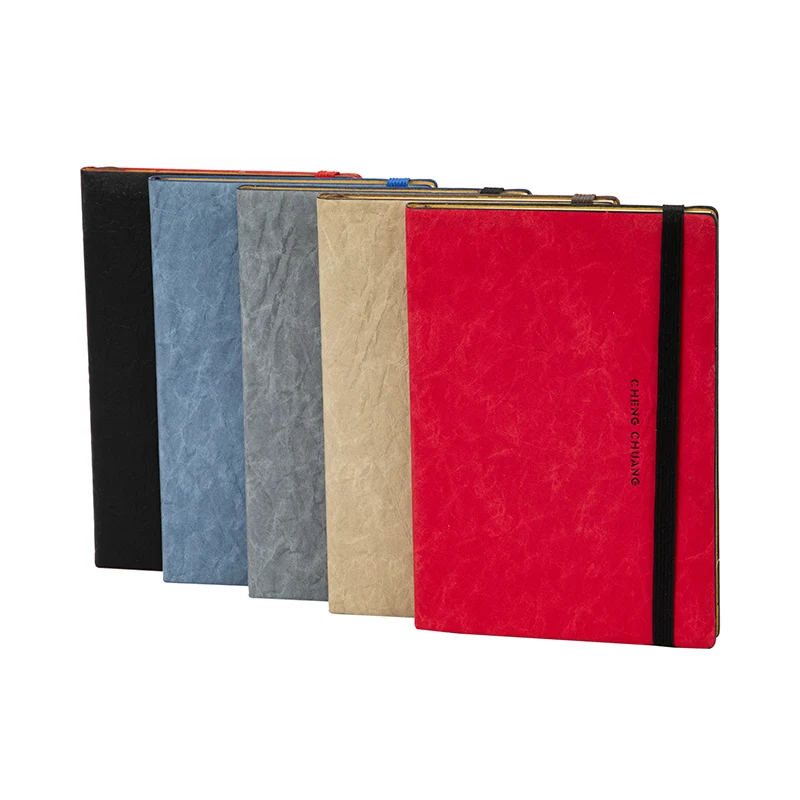
A law firm is archiving twenty years of case notes. A research institute is preserving field observations from a decade-long study. A family business is recording recipes and operational procedures that will be passed to the next generation. In each of these cases, the notebook is not a disposable item. It is a record that must survive for decades, possibly centuries. The cover, the paper, the binding, and the ink must all work together to protect the information inside. Linen Fabric Notebooks are often chosen for these applications because linen is durable, elegant, and resistant to wear. But linen alone does not guarantee long-term storage. The paper must be acid-free, the binding must be strong enough to withstand repeated opening and closing, and the fabric must be properly finished to resist moisture and pests. For procurement managers, selecting a Linen Fabric Notebook for long-term storage requires attention to these details.
This guide is written for buyers who need to source Linen Fabric Notebooks that will protect notes for decades. We will explain the paper specifications that matter for archival storage, the binding methods that ensure durability, the fabric treatments that resist degradation, and the criteria for evaluating a supplier. We will also provide detailed product parameters from our factory at Wenzhou Yanhe Technology Co., Ltd. Whether you are sourcing notebooks for legal archives, research records, or corporate documentation, this guide will help you select a notebook that meets the highest standards of long-term storage.
The paper inside a Linen Fabric Notebook is the most critical factor in long-term storage. Paper is made from cellulose fibers, which are naturally stable. However, the manufacturing process can introduce acidity, either from the sizing agents used to improve writing performance or from the lignin content in wood pulp. Acidic paper degrades over time, turning yellow, becoming brittle, and eventually crumbling. This process is accelerated by heat, humidity, and light. For notes that must survive for decades, the paper must be acid-free, with a pH of 7.0 or slightly alkaline. The table below summarizes the paper specifications that matter for long-term storage.
| Specification | Requirement for Long-Term Storage | Effect on Longevity |
| pH Level | 7.0 - 8.5 (neutral to slightly alkaline) | Prevents acid hydrolysis and embrittlement |
| Lignin Content | < 1% (lignin-free pulp) | Prevents yellowing and weakening |
| Alkaline Reserve | 2% calcium carbonate | Neutralizes future acid exposure |
| Paper Weight | 100 - 120 gsm | Provides strength for handling |
| Brightness | Natural or slightly off-white | Reduces need for optical brighteners |
At Wenzhou Yanhe Technology Co., Ltd., our factory uses acid-free paper for all of our Linen Fabric Notebooks. We source paper from mills that certify their products to ISO 9706, the standard for permanent paper. This certification guarantees that the paper meets the requirements for long-term storage. Our quality control team verifies the pH and lignin content of every batch before it enters production.
The binding is the mechanism that holds the pages together and attaches them to the cover. A weak binding will fail long before the paper degrades, causing pages to loosen or fall out. The most durable binding methods for long-term storage are Smyth sewing and thread sewing. In Smyth sewing, the pages are sewn together with thread and then glued into the cover. This creates a strong, flexible spine that allows the notebook to lay flat. In thread sewing, the pages are sewn through the fold, creating an even stronger binding. Perfect binding, which uses glue alone, is less durable and can fail over time, especially if the notebook is opened frequently. The table below compares the binding methods.
| Binding Method | Durability | Lay-Flat Ability | Suitable for Long-Term Storage |
| Smyth Sewing | Excellent | Yes | Yes |
| Thread Sewing | Excellent | Yes | Yes |
| Perfect Binding (Glue) | Moderate | No | Not recommended |
| Wire-O Binding | Good | Yes | Conditional (metal may corrode) |
| Case Binding | Excellent | No | Yes |
At our factory, we use Smyth sewing for our Linen Fabric Notebooks. This method provides the durability needed for long-term storage and allows the notebook to lay flat for easy writing. We also offer case binding for applications that require a more traditional, rigid cover. Our binding is tested for page pull strength to ensure that it meets our specifications.
The linen fabric cover is the first line of defense against environmental damage. Linen is naturally durable and resistant to wear, but it can be susceptible to moisture, mold, and pests if not properly treated. The most common treatments for linen covers are water-repellent finishes, anti-fungal treatments, and starch coatings. Water-repellent finishes prevent moisture from penetrating the fabric, reducing the risk of mold and mildew. Anti-fungal treatments inhibit the growth of mold and bacteria. Starch coatings provide a crisp, smooth surface that resists dirt and wear. The table below summarizes these treatments.
| Treatment | Function | Benefit for Long-Term Storage |
| Water-Repellent Finish | Prevents moisture absorption | Reduces mold and mildew risk |
| Anti-Fungal Treatment | Inhibits mold and bacteria growth | Protects fabric from biological degradation |
| Starch Coating | Provides smooth, dirt-resistant surface | Extends fabric life and appearance |
| UV Stabilizer | Prevents fading and weakening from light | Protects color and fiber strength |
At Yanhe, our factory applies a water-repellent finish and an anti-fungal treatment to all of our Linen Fabric Notebooks. We also offer a UV stabilizer for notebooks that will be exposed to light. Our treatments are tested to ensure that they do not affect the appearance or feel of the linen. We can also customize the treatment to meet specific customer requirements.
Testing a Linen Fabric Notebook for long-term storage suitability requires a combination of laboratory tests and visual inspection. The key tests are pH testing, lignin content testing, page pull testing, and accelerated aging testing. pH testing verifies that the paper is acid-free. Lignin content testing verifies that the paper is lignin-free. Page pull testing verifies the strength of the binding. Accelerated aging testing simulates the effects of time by exposing the notebook to elevated temperature and humidity. The table below summarizes these tests.
| Test | What It Measures | Acceptance Criteria |
| pH Test | Acidity of paper | pH 7.0 - 8.5 |
| Lignin Content | Lignin in paper | < 1% |
| Page Pull Test | Binding strength | > 5 N per page |
| Accelerated Aging | Long-term durability | No significant yellowing or embrittlement |
| Fabric Abrasion Test | Cover durability | > 10,000 cycles |
At our factory, we perform these tests on every production batch of Linen Fabric Notebooks. We also provide test reports to our customers upon request. Our goal is to ensure that every notebook we produce meets the requirements for long-term storage.
When purchasing Linen Fabric Notebooks for long-term storage, the buyer should include detailed specifications in the purchase order. The key specifications are the paper type, the paper weight, the pH level, the binding method, the fabric type, the fabric treatment, the cover construction, and the packaging. The table below summarizes these specifications.
| Specification | Requirement | Notes |
| Paper Type | Acid-free, lignin-free | ISO 9706 certified |
| Paper Weight | 100 - 120 gsm | Provides strength for handling |
| pH Level | 7.0 - 8.5 | Neutral to slightly alkaline |
| Binding Method | Smyth Sewn | Durable and lay-flat |
| Fabric Type | 100% Linen or Linen Blend | Selected for durability and appearance |
| Fabric Treatment | Water-repellent, anti-fungal | Protects against moisture and mold |
| Cover Construction | Rigid board with fabric wrap | Provides structural support |
| Packaging | Individually wrapped, boxed | Protects during shipping and storage |
At Wenzhou Yanhe Technology Co., Ltd., we work with our customers to ensure that all specifications are clearly defined and understood before production begins. We provide samples for approval and maintain strict quality control throughout the production process.
Evaluating a supplier of Linen Fabric Notebooks for long-term storage requires a focus on material quality, binding capability, fabric treatment, testing, and documentation. The supplier must use acid-free paper from certified mills. They must have the equipment and expertise to produce Smyth-sewn bindings. They must apply appropriate fabric treatments. They must test their products for pH, lignin content, and binding strength. And they must provide documentation to verify the specifications. The table below summarizes the evaluation criteria.
| Evaluation Criterion | What to Look For | Why It Matters |
| Material Quality | ISO 9706 certified paper, high-quality linen | Ensures long-term stability |
| Binding Capability | Smyth sewing equipment, page pull testing | Ensures durable binding |
| Fabric Treatment | Water-repellent, anti-fungal finishes | Protects cover from degradation |
| Testing Capability | pH testing, lignin testing, aging tests | Verifies long-term storage suitability |
| Documentation | Material certs, test reports | Supports quality assurance |
At our factory, we have been producing Linen Fabric Notebooks for over a decade. We use ISO 9706 certified paper and Smyth-sewn bindings. We apply water-repellent and anti-fungal treatments to our linen covers. We test every batch for pH, lignin content, and binding strength. And we provide complete documentation with every shipment. We invite you to evaluate us against these criteria and to consider us as your partner for Linen Fabric Notebooks.
The following table provides the key product parameters for our Linen Fabric Notebooks. These notebooks are designed for long-term note storage and archival applications. Our factory can also produce custom notebooks to meet specific requirements.
| Parameter | Specification Range | Notes |
| Paper Type | Acid-free, lignin-free | ISO 9706 certified |
| Paper Weight | 100 - 120 gsm | Selected for strength and writing feel |
| Paper Color | Natural, Ivory, White | Natural reduces optical brighteners |
| Binding Method | Smyth Sewn, Case Bound | Selected for durability and lay-flat |
| Fabric Type | 100% Linen, Linen-Cotton Blend | Selected for appearance and durability |
| Fabric Treatment | Water-Repellent, Anti-Fungal, UV Stabilizer | Selected for environmental protection |
| Cover Construction | Rigid Board with Fabric Wrap | Provides structural support |
| Page Count | 160 - 300 pages | Custom page counts available |
| Size | A5, B5, Custom | Selected for application |
| MOQ | 500 pieces | Negotiable for large orders |
| Lead Time | 3 - 5 weeks | Depends on quantity and customization |
At our factory, we manufacture our Linen Fabric Notebooks to meet these specifications and more. We can customize the paper, binding, fabric, and size to suit your specific requirements. Our quality control system includes inspection of raw materials, in-process inspection, and final inspection before shipment. Our goal is to provide our customers with high-quality Linen Fabric Notebooks that protect their notes for decades.
Question 1: What is the most important factor for long-term note storage in a linen fabric notebook?
Answer: The most important factor is the paper. It must be acid-free and lignin-free to prevent yellowing, embrittlement, and degradation over time. Look for paper that is certified to ISO 9706, which guarantees that it meets the requirements for permanent paper. The binding and fabric are also important, but the paper is the foundation of long-term storage.
Question 2: How long can notes last in a linen fabric notebook?
Answer: Notes stored in a properly made Linen Fabric Notebook with acid-free paper and a durable binding can last for centuries under good storage conditions. The paper will not yellow or become brittle, and the binding will hold the pages together. The fabric cover protects the pages from light, dust, and moisture. Proper storage in a cool, dry place away from direct sunlight will maximize the lifespan.
Question 3: What is the difference between Smyth sewing and perfect binding?
Answer: Smyth sewing uses thread to sew the pages together and then attaches them to the cover. This creates a strong, flexible spine that allows the notebook to lay flat. Perfect binding uses glue alone to hold the pages together. It is less durable and can fail over time, especially if the notebook is opened frequently. For long-term storage, Smyth sewing is the preferred binding method.
Question 4: Can linen fabric notebooks be repaired if the binding fails?
Answer: In most cases, a failed binding cannot be repaired without disassembling the notebook and rebinding it. This is a specialized process that is not practical for most users. To avoid binding failure, choose a notebook with Smyth sewing or thread sewing, which are the most durable binding methods. Proper handling and storage also extend the life of the binding.
Question 5: How should I store linen fabric notebooks for long-term preservation?
Answer: Store Linen Fabric Notebooks in a cool, dry place away from direct sunlight. Use a bookshelf or archival box to protect them from dust and pests. Avoid storing them in damp basements or attics where humidity and temperature fluctuate. If the notebook is particularly valuable, consider using acid-free slipcases or archival storage boxes. Proper storage will maximize the lifespan of the notebook and the notes inside.
Selecting Linen Fabric Notebooks for long-term note storage requires attention to paper acidity, binding durability, fabric treatment, and testing. The paper must be acid-free and lignin-free to prevent degradation. The binding must be strong enough to withstand repeated use. The fabric must be treated to resist moisture, mold, and UV light. And the supplier must provide documentation to verify the specifications. At Wenzhou Yanhe Technology Co., Ltd., our factory has the expertise and the equipment to produce Linen Fabric Notebooks that meet the highest standards of long-term storage. We use ISO 9706 certified paper, Smyth-sewn bindings, and treated linen covers. Our quality control system ensures that every notebook meets our specifications.
Whether you are sourcing notebooks for legal archives, research records, or corporate documentation, we invite you to contact us to discuss your requirements. We can provide samples, test reports, and customized solutions. Our commitment to quality and customer satisfaction has made us a trusted partner for businesses around the world.
Contact Wenzhou Yanhe Technology Co., Ltd. today to discuss your Linen Fabric Notebook requirements and discover how our products can protect your notes for decades.